Showing posts with label Rack and Pinion. Show all posts

Critical Factors in Proper Pneumatic Valve Actuator Sizing

Proper Pneumatic Valve Actuator Sizing

Properly sizing a pneumatic valve actuator is essential for reliable and safe valve operation in industrial environments. It involves carefully analyzing the valve’s torque requirements, actuator characteristics, and the conditions under which the system will function.

The first step is determining exactly how much torque the valve requires. Valve manufacturers typically specify torque ratings that detail the force needed to open and close the valve under normal operating conditions. However, these torque values can change depending on factors like the valve design, the fluid or gas passing through it, and the pressures and temperatures involved. For instance, metal-seated butterfly valves usually require higher torque initially to break away from their seats but less force once they begin moving. In contrast, ball valves often need more consistent torque throughout their movement.

Once the valve’s torque requirements are determined, it’s essential to include an appropriate safety margin to account for variations or unexpected conditions. A standard industry practice is to add around 25% to the highest torque requirement. This extra margin ensures the actuator can handle unforeseen situations like the buildup of deposits within the valve or temperature extremes, which can increase torque demands beyond normal operating conditions.

Next, selecting the correct actuator type is essential. Pneumatic actuators come primarily in two varieties: rack-and-pinion and scotch yoke designs. Rack-and-pinion actuators offer consistent torque throughout their stroke, making them ideal for valves requiring uniform torque application. Scotch yoke actuators, meanwhile, produce higher torque at the start and end of their stroke. This characteristic makes them particularly suited to valves requiring significant force to break open or securely close.

Another critical factor is the available air supply pressure, which directly impacts how much torque an actuator can generate. It is vital to confirm that the actuator can deliver the necessary torque at the lowest expected air pressure. If the air supply pressure drops below expected levels, the actuator may not produce sufficient torque, potentially leading to operational issues. Always verify actuator torque output at minimum air pressure against the valve’s torque needs, including the safety margin.

Additionally, defining any fail-safe requirements early in the selection process is essential. Depending on the application, valves may need to fail in a specific position, either open, closed, or remain stationary upon loss of air pressure. Single-acting actuators, which use internal springs, automatically return to a predetermined position when the air supply is lost, making them ideal for applications requiring a defined fail-safe condition. Double-acting actuators, however, rely entirely on air pressure for both opening and closing movements, causing them to remain wherever they happen to be when pressure fails.

Finally, after thoroughly evaluating all these factors—valve torque requirements, actuator type, available air pressure, and fail-safe positions—you can confidently choose an actuator model. Manufacturer-provided actuator performance charts are valuable tools at this stage. These charts display torque output at various air pressures, helping match the actuator capabilities directly to your calculated torque requirements.

Selecting the right pneumatic valve actuator requires a methodical approach to ensure both performance and safety. When evaluating actuator options, carefully assess torque requirements, operating conditions, and fail-safe needs while consulting manufacturer specifications throughout the process.

Remember that proper sizing directly impacts system reliability, efficiency, and workplace safety. All pneumatic actuator specifications should undergo expert review prior to installation to verify compatibility with your specific application and compliance with relevant safety standards.

UniTorq
https://unitorq.com
770-446-7074

Advantages of Stainless Steel Body Pneumatic Rack & Pinion Actuators

Advantages of Stainless Steel Body Pneumatic Rack & Pinion Actuators

Stainless steel body pneumatic rack and pinion actuators have gained significant popularity in various industrial sectors due to their robust construction and reliable performance by combining the toughness of stainless steel with the efficiency of pneumatic operation, these actuators offer several advantages that make them suitable for demanding applications.

One of these actuators' primary advantages is their exceptional resistance to corrosion. Stainless steel protects against corrosion from exposure to harsh chemicals, moisture, and extreme temperatures. This quality makes these actuators ideal for chemical processing, pharmaceuticals, and food and beverage production, where equipment frequently contacts corrosive substances or requires regular washdowns.

Durability represents another significant benefit of these actuators. The stainless steel construction ensures long-term operational reliability, reducing the need for frequent maintenance or replacement. This durability translates into lower operational costs and increased productivity as minimal equipment downtime occurs. In industries where continuous operation remains critical, such as oil and gas or power generation, the reliability of stainless steel actuators becomes an invaluable asset.

These actuators also offer high performance in terms of torque output and speed. The rack and pinion mechanism efficiently converts the linear motion of the pneumatic piston into rotational motion, providing precise control over valve positions. This precision is crucial in applications that require accurate flow control, such as water treatment facilities or chemical dosing systems.

The hygienic properties of stainless steel make these actuators suitable for use in industries with strict sanitary requirements. Equipment in the food and beverage industry must adhere to stringent hygiene standards to prevent contamination. Operators can easily clean stainless steel actuators, which do not harbor bacteria, ensuring compliance with health and safety regulations. Similarly, in pharmaceutical manufacturing, maintaining sterile conditions is essential; stainless steel equipment supports this necessity.

Industries operating in extreme temperatures also benefit from stainless steel body pneumatic rack and pinion actuators. Stainless steel retains its mechanical properties over a wide temperature range, making these actuators suitable for cryogenic applications or high-temperature processes. For example, these actuators maintain consistent performance in power plants or refineries, where temperatures can fluctuate significantly.

Stainless steel body pneumatic rack and pinion actuators offer a combination of corrosion resistance, durability, precision, and safety. Industries that benefit most from these actuators include chemical processing, pharmaceuticals, food and beverage production, oil and gas, water treatment, and power generation. The unique advantages of stainless steel construction make these actuators reliable for applications that demand high performance and resilience in challenging environments. By investing in stainless steel actuators, industries can enhance operational efficiency, ensure compliance with regulatory standards, and achieve long-term cost savings through reduced maintenance and downtime.

UNITORQ
2150 Boggs Road
Suite 410
Duluth, GA 30096
Phone: 770-446-7074
Fax: 770-447-1825

Rack and Pinion Actuator Sizing

Rack and Pinion Actuator Sizing

Sizing rack and pinion actuators for valves is a critical process that demands precise attention to detail to ensure optimal performance and longevity. In industrial applications, the correct sizing of these actuators is a matter of efficiency, safety, and reliability.

The foremost aspect to consider when sizing rack and pinion actuators is the torque requirements of the valve, meaning calculating the valve's torque demand during various phases of its operation, such as the breakaway torque, the running torque, and the seating torque. It's essential to understand that these torque values can vary significantly based on the type and condition of the valve, the process media, and the operational temperature. Underestimating the torque requirements can lead to the actuator being undersized, resulting in insufficient power to operate the valve effectively. Conversely, an oversized actuator can lead to unnecessary expenditure and potential control issues.

Another crucial factor is the actuator's air supply. The actuator needs an adequate and stable air supply to function correctly. The sizing of the actuator must account for the available air pressure and volume, ensuring that these parameters meet the requirements for the actuator to deliver the necessary torque.
Furthermore, the actuator's speed of operation is a vital consideration. The speed at which a valve opens or closes can significantly impact process performance and safety. A slow-acting valve may not respond quickly enough in emergency shutdown situations, while a too-rapid action might cause pressure surges or mechanical stresses.

Lastly, compatibility between the actuator and the valve is a non-negotiable aspect because it encompasses the physical connection and compatibility regarding the actuator's range of motion and required stroke.

The accurate sizing of rack and pinion actuators to valves hinges on a comprehensive understanding of the torque requirements, air supply specifications, operational speed, environmental conditions, and compatibility. These aspects ensure that the actuator operates efficiently, safely, and reliably, which is paramount in industrial valve applications.

UniTorq's Series M Rack and Pinion Actuator Online Sizing Tool introduces a practical solution for engineers in valve automation. This tool facilitates the selection of the most suitable actuator for specific applications. Users input the operational parameters and valve specifications, and the program employs advanced algorithms to suggest the appropriate Series M actuator. The program seeks to enhance the precision in actuator selection, contributing to improved efficiency and reliability in valve operations. UniTorq's Series M Online Sizing Program integrates technology and engineering expertise to optimize valve system performance.

UniTorq Actuators and Controls
2150 Boggs Road, Suite 410
Duluth, GA 30096
https://unitorq.com
Phone: (770) 446-7074
Fax: (770) 447-1825

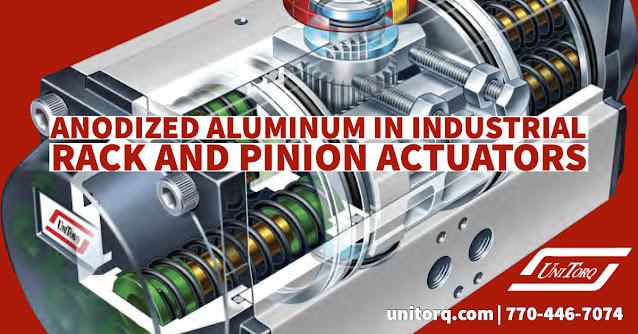
The Advantages of Using Anodized Aluminum in Industrial Rack and Pinion Actuators

The Advantages of Using Anodized Aluminum in Industrial Rack and Pinion Actuators

Rack and pinion actuators, widely used in industrial applications, deliver precise linear motion control. The preferred material for their construction is anodized aluminum due to its specific properties that enhance the performance and longevity of the actuators.

Anodized aluminum is lightweight, reducing the overall weight of the actuator system - a crucial factor in weight-sensitive industries like aerospace and automotive. Despite its lightweight, anodized aluminum retains considerable strength, making it suitable for applications demanding strength and durability.

The anodizing process converts the aluminum surface into a corrosion-resistant, anodic oxide finish, providing excellent protection from rust and other environmental corrosion. The thickness of this oxide layer depends on the type of anodizing—Type II or Type III—each providing different levels of corrosion resistance, surface hardness, and color vibrancy.

Type III, often called hard anodizing, forms a thicker oxide layer than Type II. This enhanced thickness results in superior wear resistance and durability, making it suitable for heavy-duty, high-wear applications. It also offers better resistance to high temperatures and produces a surface harder than tool steel. The downside of Type III is that it's less amenable to vibrant coloring due to its denser, less porous oxide layer and requires lower temperatures, higher current densities, and longer processing times.

In contrast, Type II anodizing, while producing a thinner oxide layer, is easier to color, making it more aesthetically adaptable. It's also a more cost-effective process, favoring applications where budget is a significant factor.

Anodized aluminum also offers high thermal conductivity, allowing effective heat dispersion, which is essential in applications where high heat could harm the actuator or shorten its lifespan. Furthermore, anodizing enhances the surface hardness of aluminum, which is beneficial for actuators operating in high wear-and-tear environments.

While anodized aluminum is a common choice, it's not universal, as the material selection depends on the application's specific requirements, environmental conditions, cost, and design constraints. Aesthetics also play, especially in consumer-facing applications, as anodized aluminum can be easily dyed to fit various color preferences.

The choice between Type II and Type III anodizing depends on the application requirements. Type III is the better choice for applications requiring maximum hardness and wear resistance, while Type II is preferable for cost-sensitive or aesthetically-focused applications.

https://unitorq.com
770-446-7074

Rack and Pinion Actuators

Rack and Pinion Actuators

Rack and pinion actuators are preferred for operating valves because they offer several advantages over other actuators. They are relatively simple and easy to maintain, with few moving parts. They are also compact, allowing for use in tight spaces. Additionally, rack and pinion actuators provide precise control over the valve, with high repeatability and accuracy. They are also capable of handling high torque loads, making them suitable for use with large valves. Overall, rack and pinion actuators are reliable, efficient, and cost-effective options for valve actuation.