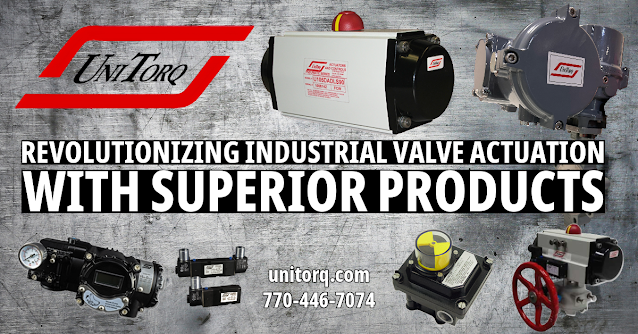
Why Smart Engineers Are Choosing UniTorq and SeniTec for Valve Automation
A high-quality, low-cost alternative to the legacy brands — and why once engineers make the switch, they rarely look back.
If you've spent any time sourcing valve automation components, you already know how quickly the costs can spiral out of control. Between the big-name manufacturers commanding premium prices and the off-brand imports that look good on paper until they don't, finding that sweet spot of reliability and affordability can feel like a full-time job. That's exactly why more engineers and procurement teams are discovering the combination of UniTorq pneumatic actuators and SeniTec limit switches and positioners — and why once they make the switch, they rarely look back.
What Makes Valve Automation So Complicated?
Let's be honest about the challenge. A valve automation system is only as good as every component in it. You need an actuator that delivers consistent torque across thousands of cycles, a limit switch or positioner that gives you accurate feedback in real time, and you need all of it to hold up under whatever your process throws at it — whether that's chemical exposure, extreme temperatures, or just the relentless grind of continuous operation.
The market is flooded with options. At one end, you have the legacy brands that have been around forever. Their products are proven, but you're paying for that legacy. At the other end, there are budget imports that cut corners in ways that don't always show up until you've got a process down and a maintenance crew scratching their heads. What's been missing for a lot of facilities is a genuinely capable, well-engineered solution that doesn't ask you to choose between performance and budget.
UniTorq and SeniTec together fill that gap better than almost anything else available right now — delivering real-world performance at a price point that holds up under scrutiny.
UniTorq Pneumatic Actuators: Built for the Real World
UniTorq has been engineering pneumatic actuators for decades, and the products they make at unitorq.com reflect a company that understands what happens to valve automation hardware in the field, not just in a test lab.
Their pneumatic actuators use a scotch-yoke or rack-and-pinion design depending on the application, and the engineering behind both is tight. The torque output is consistent, the seals are built to last, and the materials hold up to corrosive environments that would eat through inferior products in months. One of the things that sets UniTorq apart is the modularity of the design — you can configure actuators for a huge range of valve sizes and torque requirements without being forced into a custom-order situation that blows your lead time and your budget.
What does that mean practically? It means when you're automating a new line or retrofitting an existing one, you're not waiting weeks for a specialized unit. You're pulling from a platform that's designed to work across your application, with standardized mounting that integrates cleanly with the rest of your system.
The other thing people notice pretty quickly with UniTorq is the build quality relative to the price point. These aren't cheap in the sense of being flimsy — they're cost-effective because the manufacturing is efficient, not because corners are being cut. The bodies are precision-machined, the internal components are properly toleranced, and the units are tested before they ship. For most applications, they perform right alongside actuators that cost significantly more.
SeniTec Limit Switches and Positioners: Precision Without the Premium
If UniTorq gives you the muscle of the automation system, SeniTec handles the brains. The limit switches and positioners available at senitec.com are designed specifically for the valve automation space, and that focus shows in how well they integrate with the rest of a valve package.
The limit switches are available in multiple housing configurations — stainless, aluminum, and polycarbonate — so you can match the unit to your environment without over-specifying and overspending. The switching mechanisms are rated for serious cycle counts, and the electrical ratings cover everything from basic discrete I/O to the more demanding setups you find in process-heavy industries.
What really stands out about SeniTec's positioners is the combination of precision and simplicity. A lot of engineers have dealt with positioners that require extensive field calibration and then drift anyway, or that offer so many configuration options they become a challenge to set up quickly. SeniTec has found a balance — the positioners deliver accurate, repeatable positioning across the full stroke, they're straightforward to configure, and they stay calibrated over time. For facilities running modulating valve control applications, that translates directly into tighter process control and fewer maintenance headaches.
The signal compatibility is broad, covering 4-20mA and other common industrial standards, which means SeniTec positioners slot into existing control architectures without requiring infrastructure changes. That's a bigger deal than it sounds if you're adding automation to an existing plant rather than building from the ground up.
The Real Question: What Does the Alternative Actually Cost?
A lot of purchasing decisions in valve automation come down to a comparison of purchase price, and that analysis almost always understates the true cost of the more expensive option. When you buy into a premium brand, you're paying for the name, for the sales infrastructure, for the extensive product catalog that includes configurations you'll never need, and for margins that have been inflated by years of market dominance.
What you're usually not getting is a proportional improvement in performance for your specific application. For standard pneumatic valve automation — the kind that makes up the majority of industrial automation projects — the engineering differences between a premium actuator and a well-made mid-market actuator like UniTorq are marginal. The reliability difference, for most applications in most conditions, is negligible.
The math on SeniTec is similar. When you compare the cost of a SeniTec limit switch or positioner against comparable units from the major automation brands, the savings are real. Over the course of a full project with dozens or hundreds of valve assemblies, those savings compound into significant budget that can be redeployed into other parts of the system, or simply returned to the bottom line.
And here's what's not reflected in the purchase price comparison at all: because both UniTorq and SeniTec are designed to work together as part of a complete valve package, the integration is smooth. You're not troubleshooting compatibility issues between an actuator from one manufacturer and a positioner from another. The mounting interfaces, the feedback mechanisms, the overall package comes together cleanly, which reduces installation time and eliminates a category of field problems before they start.
Who Benefits Most from This Combination?
The UniTorq and SeniTec pairing makes the most sense for a few specific situations, and if any of them sound familiar, it's worth taking a closer look.
Capital projects almost always have pressure on automation budgets. When you can deliver the same functional performance at meaningfully lower cost, you protect scope and keep the project on track. This combination delivers genuine value without compromising the reliability of the finished system.
When you're adding automation to a plant that's already running, standardization matters. UniTorq's broad range of actuator sizes and configurations makes it easier to find the right fit for existing valves, and SeniTec's signal compatibility keeps the new equipment talking cleanly to legacy control systems.
The economics of choosing UniTorq and SeniTec get more compelling as the valve count goes up. On a project with a hundred or more valve assemblies, the per-unit savings stack into numbers that are hard to ignore.
Both companies design their products for the realities of industrial service. UniTorq actuators are straightforward to service in the field, and replacement parts are available. SeniTec limit switches and positioners are built to last, and when service is needed, the process is simple — without the proprietary-parts headaches of some premium brands.
The Bottom Line
Valve automation doesn't need to be expensive to be good. The market has matured to the point where well-engineered, field-proven products are available at price points that make sense for real project budgets — and UniTorq and SeniTec are among the best examples of what that looks like in practice.
If you're evaluating options for an upcoming automation project, the combination deserves a serious look. Check out what UniTorq has available at unitorq.com and explore the SeniTec lineup at senitec.com. The products speak for themselves, and the savings are the kind that show up on a project summary and make the whole team look smart.