Showing posts with label Unitorq. Show all posts

Valve Automation in Water and Wastewater: What Makes This Market Different

Valve Automation in Water and Wastewater

If you've spent most of your career automating valves in refineries, chemical plants, or power generation, your first water or wastewater project can throw you off balance. Not because the equipment is radically different — you're still putting actuators on butterfly valves and ball valves — but because almost everything about the operating context is different in ways that quietly change what "good" looks like.
Water and wastewater is now one of the fastest-growing segments for valve automation, driven by massive infrastructure spending, aging distribution systems, and municipalities that are automating manually operated plants for the first time. Engineers and integrators who understand what makes this market distinct are the ones winning the work. Here's what's actually different, and what it means for the equipment you specify.

The valves are big, the pressures are low, and butterfly valves run the show

In a refinery, you'll see everything — globe valves, gate valves, ball valves, control valves, check valves — spread across a wide range of sizes and pressure classes. In water and wastewater, the mix is narrower, but the sizes tend to be larger. Butterfly valves dominate, particularly resilient-seated designs in the 4-inch to 48-inch range and beyond, operating at pressures which would barely register in a process plant.
That changes the actuator selection conversation. You're often sizing for large-diameter, low-pressure quarter-turn service where valve torque is driven primarily by seat friction and disc weight rather than differential pressure. Actuator output needs are moderate relative to the valve size, which means you can frequently use a smaller actuator than a refinery engineer could instinctively reach for. But the physical footprint still matters — the mounting interface has to handle the bolt patterns on large AWWA-style flanged bodies, and the actuator has to clear adjacent piping that's often packed tight in a valve vault or below-grade structure.

Corrosion is constant and comes from multiple directions

Every water and wastewater facility is a corrosion environment, but the sources vary. On the potable water side, chlorine and chloramine residuals attack anything that isn't properly protected. In wastewater, hydrogen sulfide gas eats through uncoated carbon steel and corrodes electrical contacts inside enclosures that aren't properly sealed. Coastal and humid climates compound both.
For actuators, that means housing protection matters more than most specifiers give it credit for. IP67 enclosures, epoxy-coated or powder-coated bodies, stainless steel fasteners, and NEMA 4X-rated switchboxes aren't premium upgrades in this market—they're the baseline. Skimping on corrosion protection to save forty dollars on an actuator that will live in a wet well for fifteen years is a false economy that maintenance crews learn to resent.
The same thinking applies to limit switches and position indicators. SeniTec offers stainless steel and polycarbonate enclosure options rated for these environments, and matching the switchbox to the atmosphere is a detail that pays off long after the purchase order is forgotten.

Many facilities are automating for the first time

This is the single biggest difference between water and wastewater and the process industries. A chemical plant was designed around automation from day one. The instrument air system was part of the first engineering package, the DCS was specified alongside the piping, and every valve that needed an actuator got one at construction.
A water treatment plant built in 1975 probably has handwheels on most of its valves. Operators walk the plant and turn them manually. The facility might have a basic SCADA system monitoring flows and levels, but the valves themselves are not automated.
When these facilities finally upgrade—often driven by tighter discharge permits, staffing shortages, or the simple fact that operators can't reach every valve fast enough during a storm event—the automation package has to work with existing infrastructure. That means dealing with valve stems and mounting dimensions that predate ISO 5211, retrofitting actuators onto valves that were never designed with automation in mind, and working within electrical systems that may have limited spare capacity.
Actuators with standardized ISO mounting, broad torque ranges within a compact product line, and flexible power options make these retrofits dramatically simpler. The ability to pull from a platform of actuator sizes that share common accessories and mounting hardware, rather than custom-engineering all installations, is what keeps a 200-valve retrofit project on schedule and on budget.

Manual overrides aren't optional — they're essential

In a staffed process plant, a failed actuator gets attention within the hour. In water and wastewater, many critical valves live in places nobody goes for days or weeks at a time: remote lift stations, booster pump houses, reservoir sites, and buried valve vaults in the distribution system.
When the air supply drops or an electric actuator loses power at one of these sites, the valve still needs to move. A declutchable manual gear override—mounted between the valve and the actuator—gives an operator a handwheel path to reposition the valve by hand without tools, disassembly, or damage to the actuator.
UniTorq's UT-ZM series was designed for exactly this scenario. The built-in isolation safety option automatically blocks supply air and vents the actuator during the transition to manual, so the operator isn't fighting residual pressure. The IP67-rated housing and powder epoxy coating over a phosphate-pretreated body hold up in the wet, corrosive conditions these overrides actually live in. And the ISO 5211 bolt patterns on both sides eliminate the adapter plates and custom machining that turn a simple installation into a field fabrication project.
For any valve in a remote or unmanned location, specifying an override isn't conservative engineering. It's the only reasonable position.

Response time requirements are different

Process plants often need valves that stroke in a second or two for emergency shutdown service. Water and wastewater almost never need that kind of speed — and in fact, speed can be a serious problem.
Closing a large butterfly valve too quickly in a transmission main creates water hammer that can rupture pipe joints, damage valve seats, and destroy pumps. Most water utility standards require controlled closing times, often 60 to 120 seconds for larger valves, specifically to prevent pressure transients. Actuator sizing in this market needs to account for that — not merely delivering enough torque to close the valve, but delivering it slowly and consistently across the full stroke.
Pneumatic actuators paired with appropriate flow control accessories handle this well. The ability to tune stroking speed by adjusting exhaust flow, combined with the linear torque profile of a rack-and-pinion design, gives engineers a predictable, controllable closing rate without requiring electronic speed management.

The bottom line

Water and wastewater valve automation rewards different priorities than the ones process industry engineers carry in from refinery or chemical plant work. The equipment doesn't need to be exotic — but it needs to be corrosion-resistant, retrofit-friendly, properly protected, and specified with an honest understanding of where and how these valves actually operate.
UniTorq has supplied actuators, overrides, and controls to water and wastewater for over 25 years. If you're working on a project in this market and want a sizing review, an answer to a retrofit mounting question, or a second opinion on the package, contact us at 770-446-7074 or info@unitorq.com.

UniTorq Actuators and Controls Has Moved

UniTorq Actuators and Controls Has Moved

UniTorq Actuators and Controls has officially relocated. You can now find us at:

UniTorq Actuators and Controls
1650 Lakes Parkway
Lawrenceville, GA 30043

The move was driven by growth. Our new home gives us a larger, more efficient office and manufacturing space, which means better production capacity, smoother operations, and more room to keep building the actuators and controls our customers depend on.

The good news for our customers and partners: nothing else changes. All phone numbers, email addresses, and points of contact remain the same. The only thing to update is our shipping and mailing address.

If you send us packages, paperwork, or visit in person, please make a note of the new address above. We're excited about this next chapter and grateful to everyone who has helped make it possible.

UniTorq Pneumatic Actuators and SeniTec Limit Switches: The Complete Valve Package That Makes Budget Sense

Why Smart Engineers Are Choosing UniTorq and SeniTec for Valve Automation
Valve Automation Insights Engineering & Procurement
Industry Analysis  ·  Valve Automation

Why Smart Engineers Are Choosing UniTorq and SeniTec for Valve Automation

A high-quality, low-cost alternative to the legacy brands — and why once engineers make the switch, they rarely look back.

If you've spent any time sourcing valve automation components, you already know how quickly the costs can spiral out of control. Between the big-name manufacturers commanding premium prices and the off-brand imports that look good on paper until they don't, finding that sweet spot of reliability and affordability can feel like a full-time job. That's exactly why more engineers and procurement teams are discovering the combination of UniTorq pneumatic actuators and SeniTec limit switches and positioners — and why once they make the switch, they rarely look back.

What Makes Valve Automation So Complicated?

Let's be honest about the challenge. A valve automation system is only as good as every component in it. You need an actuator that delivers consistent torque across thousands of cycles, a limit switch or positioner that gives you accurate feedback in real time, and you need all of it to hold up under whatever your process throws at it — whether that's chemical exposure, extreme temperatures, or just the relentless grind of continuous operation.

The market is flooded with options. At one end, you have the legacy brands that have been around forever. Their products are proven, but you're paying for that legacy. At the other end, there are budget imports that cut corners in ways that don't always show up until you've got a process down and a maintenance crew scratching their heads. What's been missing for a lot of facilities is a genuinely capable, well-engineered solution that doesn't ask you to choose between performance and budget.

UniTorq and SeniTec together fill that gap better than almost anything else available right now — delivering real-world performance at a price point that holds up under scrutiny.

UniTorq Pneumatic Actuators: Built for the Real World

UniTorq has been engineering pneumatic actuators for decades, and the products they make at unitorq.com reflect a company that understands what happens to valve automation hardware in the field, not just in a test lab.

Their pneumatic actuators use a scotch-yoke or rack-and-pinion design depending on the application, and the engineering behind both is tight. The torque output is consistent, the seals are built to last, and the materials hold up to corrosive environments that would eat through inferior products in months. One of the things that sets UniTorq apart is the modularity of the design — you can configure actuators for a huge range of valve sizes and torque requirements without being forced into a custom-order situation that blows your lead time and your budget.

What does that mean practically? It means when you're automating a new line or retrofitting an existing one, you're not waiting weeks for a specialized unit. You're pulling from a platform that's designed to work across your application, with standardized mounting that integrates cleanly with the rest of your system.

The other thing people notice pretty quickly with UniTorq is the build quality relative to the price point. These aren't cheap in the sense of being flimsy — they're cost-effective because the manufacturing is efficient, not because corners are being cut. The bodies are precision-machined, the internal components are properly toleranced, and the units are tested before they ship. For most applications, they perform right alongside actuators that cost significantly more.

SeniTec Limit Switches and Positioners: Precision Without the Premium

If UniTorq gives you the muscle of the automation system, SeniTec handles the brains. The limit switches and positioners available at senitec.com are designed specifically for the valve automation space, and that focus shows in how well they integrate with the rest of a valve package.

The limit switches are available in multiple housing configurations — stainless, aluminum, and polycarbonate — so you can match the unit to your environment without over-specifying and overspending. The switching mechanisms are rated for serious cycle counts, and the electrical ratings cover everything from basic discrete I/O to the more demanding setups you find in process-heavy industries.

What really stands out about SeniTec's positioners is the combination of precision and simplicity. A lot of engineers have dealt with positioners that require extensive field calibration and then drift anyway, or that offer so many configuration options they become a challenge to set up quickly. SeniTec has found a balance — the positioners deliver accurate, repeatable positioning across the full stroke, they're straightforward to configure, and they stay calibrated over time. For facilities running modulating valve control applications, that translates directly into tighter process control and fewer maintenance headaches.

The signal compatibility is broad, covering 4-20mA and other common industrial standards, which means SeniTec positioners slot into existing control architectures without requiring infrastructure changes. That's a bigger deal than it sounds if you're adding automation to an existing plant rather than building from the ground up.

The Real Question: What Does the Alternative Actually Cost?

A lot of purchasing decisions in valve automation come down to a comparison of purchase price, and that analysis almost always understates the true cost of the more expensive option. When you buy into a premium brand, you're paying for the name, for the sales infrastructure, for the extensive product catalog that includes configurations you'll never need, and for margins that have been inflated by years of market dominance.

What you're usually not getting is a proportional improvement in performance for your specific application. For standard pneumatic valve automation — the kind that makes up the majority of industrial automation projects — the engineering differences between a premium actuator and a well-made mid-market actuator like UniTorq are marginal. The reliability difference, for most applications in most conditions, is negligible.

The math on SeniTec is similar. When you compare the cost of a SeniTec limit switch or positioner against comparable units from the major automation brands, the savings are real. Over the course of a full project with dozens or hundreds of valve assemblies, those savings compound into significant budget that can be redeployed into other parts of the system, or simply returned to the bottom line.

And here's what's not reflected in the purchase price comparison at all: because both UniTorq and SeniTec are designed to work together as part of a complete valve package, the integration is smooth. You're not troubleshooting compatibility issues between an actuator from one manufacturer and a positioner from another. The mounting interfaces, the feedback mechanisms, the overall package comes together cleanly, which reduces installation time and eliminates a category of field problems before they start.

Who Benefits Most from This Combination?

The UniTorq and SeniTec pairing makes the most sense for a few specific situations, and if any of them sound familiar, it's worth taking a closer look.

Budget-Constrained Projects

Capital projects almost always have pressure on automation budgets. When you can deliver the same functional performance at meaningfully lower cost, you protect scope and keep the project on track. This combination delivers genuine value without compromising the reliability of the finished system.

Retrofit & Expansion on Existing Facilities

When you're adding automation to a plant that's already running, standardization matters. UniTorq's broad range of actuator sizes and configurations makes it easier to find the right fit for existing valves, and SeniTec's signal compatibility keeps the new equipment talking cleanly to legacy control systems.

High Valve Count Applications

The economics of choosing UniTorq and SeniTec get more compelling as the valve count goes up. On a project with a hundred or more valve assemblies, the per-unit savings stack into numbers that are hard to ignore.

Environments Where Serviceability Matters

Both companies design their products for the realities of industrial service. UniTorq actuators are straightforward to service in the field, and replacement parts are available. SeniTec limit switches and positioners are built to last, and when service is needed, the process is simple — without the proprietary-parts headaches of some premium brands.

The Bottom Line

Valve automation doesn't need to be expensive to be good. The market has matured to the point where well-engineered, field-proven products are available at price points that make sense for real project budgets — and UniTorq and SeniTec are among the best examples of what that looks like in practice.

If you're evaluating options for an upcoming automation project, the combination deserves a serious look. Check out what UniTorq has available at unitorq.com and explore the SeniTec lineup at senitec.com. The products speak for themselves, and the savings are the kind that show up on a project summary and make the whole team look smart.

Advantages of Stainless Steel Body Pneumatic Rack & Pinion Actuators

Advantages of Stainless Steel Body Pneumatic Rack & Pinion Actuators

Stainless steel body pneumatic rack and pinion actuators have gained significant popularity in various industrial sectors due to their robust construction and reliable performance by combining the toughness of stainless steel with the efficiency of pneumatic operation, these actuators offer several advantages that make them suitable for demanding applications.

One of these actuators' primary advantages is their exceptional resistance to corrosion. Stainless steel protects against corrosion from exposure to harsh chemicals, moisture, and extreme temperatures. This quality makes these actuators ideal for chemical processing, pharmaceuticals, and food and beverage production, where equipment frequently contacts corrosive substances or requires regular washdowns.

Durability represents another significant benefit of these actuators. The stainless steel construction ensures long-term operational reliability, reducing the need for frequent maintenance or replacement. This durability translates into lower operational costs and increased productivity as minimal equipment downtime occurs. In industries where continuous operation remains critical, such as oil and gas or power generation, the reliability of stainless steel actuators becomes an invaluable asset.

These actuators also offer high performance in terms of torque output and speed. The rack and pinion mechanism efficiently converts the linear motion of the pneumatic piston into rotational motion, providing precise control over valve positions. This precision is crucial in applications that require accurate flow control, such as water treatment facilities or chemical dosing systems.

The hygienic properties of stainless steel make these actuators suitable for use in industries with strict sanitary requirements. Equipment in the food and beverage industry must adhere to stringent hygiene standards to prevent contamination. Operators can easily clean stainless steel actuators, which do not harbor bacteria, ensuring compliance with health and safety regulations. Similarly, in pharmaceutical manufacturing, maintaining sterile conditions is essential; stainless steel equipment supports this necessity.

Industries operating in extreme temperatures also benefit from stainless steel body pneumatic rack and pinion actuators. Stainless steel retains its mechanical properties over a wide temperature range, making these actuators suitable for cryogenic applications or high-temperature processes. For example, these actuators maintain consistent performance in power plants or refineries, where temperatures can fluctuate significantly.

Stainless steel body pneumatic rack and pinion actuators offer a combination of corrosion resistance, durability, precision, and safety. Industries that benefit most from these actuators include chemical processing, pharmaceuticals, food and beverage production, oil and gas, water treatment, and power generation. The unique advantages of stainless steel construction make these actuators reliable for applications that demand high performance and resilience in challenging environments. By investing in stainless steel actuators, industries can enhance operational efficiency, ensure compliance with regulatory standards, and achieve long-term cost savings through reduced maintenance and downtime.

UNITORQ
2150 Boggs Road
Suite 410
Duluth, GA 30096
Phone: 770-446-7074
Fax: 770-447-1825

The Role of Declutchable Manual Gear Overrides in Industrial Valve Automation

The Role of Declutchable Manual Gear Overrides in Industrial Valve Automation

Declutchable Manual Gear Overrides are vital in industrial valve automation, ensuring seamless operations and safety. These devices are essential when the primary automated actuators fail or become unavailable, allowing operators to control valves and maintain process control manually.


Understanding Declutchable Manual Gear Overrides


At the heart of these devices lies their "declutchable" feature. This unique characteristic allows operators to disengage the manual override from the automated system when it is not in use. The significance of this feature cannot be overstated, as it prevents any potential interference between manual and automated operations. This seamless transition between manual and automated modes is crucial for maintaining operational integrity and safety.


Importance Across Various Industries


Declutchable Manual Gear Overrides are indispensable across multiple industries for several key reasons:


  1. Backup Operation During Failures: During power outages or actuator failures, these overrides serve as a reliable backup method to operate valves. This capability is crucial for maintaining process control and ensuring safety, as it allows operators to manually control the valves, preventing potential hazards or process disruptions.
  2. Facilitating Maintenance and Testing: These overrides enable manual testing and maintenance of valves without the need to dismantle the entire automated system. This feature is particularly valuable as it reduces downtime and maintenance costs while ensuring the continued functionality of the automated system.


Design and Mechanism


The gear mechanism integrated into these overrides is pivotal in their functionality. By multiplying the operator's input force, the mechanism makes it significantly easier to manually move large or high-pressure valves.


Applications in Key Industries


Declutchable Manual Gear Overrides find extensive application in various industries, each of which benefits from their unique capabilities:


  1. Oil and Gas Industry: In the oil and gas sector, operations reliability and safety are paramount. These overrides provide a critical manual control option, ensuring processes continue smoothly even during automation failures.
  2. Water Treatment: Maintaining precise control over valve positions is essential for efficient and safe water management in water treatment facilities. The manual overrides offer an additional layer of control, contributing to the system's overall reliability.
  3. Power Generation: Power generation plants rely heavily on automated systems for efficiency and safety. Declutchable Manual Gear Overrides provide a necessary fallback, ensuring that operations are maintained even during automation issues.
  4. Chemical Processing: In chemical processing, precisely controlling valve positions is crucial for maintaining safety and process integrity.


Declutchable Manual Gear Overrides are indispensable components in industrial valve automation systems. Their ability to provide manual control during automation failures, facilitate maintenance and testing, and offer precise adjustments makes them essential for ensuring plant reliability, safety, and operational flexibility. 


UniTorq Actuators and Controls
2150 Boggs Road, Suite 410
Duluth, GA 30096
https://unitorq.com
Phone: (770) 446-7074
Fax: (770) 447-1825

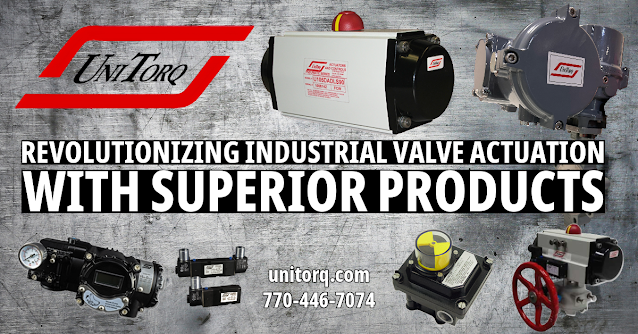
UniTorq: Revolutionizing Industrial Valve Actuation with Superior Products

UniTorq: Revolutionizing Industrial Valve Actuation with Superior Products

In the dynamic world of industrial automation, UniTorq stands out as a beacon of innovation and reliability. With a steadfast commitment to quality and performance, UniTorq has established itself as a leading manufacturer of industrial valve actuation products. 

Pneumatic and Electric Actuators

UniTorq's pneumatic and electric actuators are the cornerstones of their product line. These actuators are designed for precision and durability, ensuring consistent performance even in the most demanding environments. Pneumatic actuators offer powerful and efficient operation, making them ideal for high-tonality and high-speed applications. On the other hand, the electric actuators provide unparalleled accuracy and control, suitable for processes that demand precise positioning and smooth motion.

Senitec Valve Position Indicators

A unique offering from UniTorq is the Senitec range of valve position indicators. These indicators provide clear and accurate visual feedback on valve positions, enhancing safety and operational efficiency. Senitec position indicators withstand harsh conditions, ensuring reliable performance in various industrial settings. Senitec indicators are an essential tool for maintaining process integrity and minimizing downtime.

Declutchable Gear Overrides

Understanding the need for manual operation indicators in specific scenarios, UniTorq offers declutchable gear overrides. These overrides enable manual control of valves during power outages or system maintenance. They are easy to engage and operate, maintaining process control even without power. This feature is precious in critical applications where continuous operation is paramount.

NAMUR Mount Solenoid Valves

The NAMUR mount solenoid valves from UniTorq provide seamless integration with actuators. These valves offer fast and reliable switching, essential for controlling fluid flow in automated systems. Their compatibility with NAMUR standards ensures ease of installation and maintenance, making them popular among industry professionals.

Valve Positioners

At the forefront of UniTorq's technological advancements are its valve positioners. These positioners provide sophisticated control of valve positioning, adapting to varying process conditions. They are equipped with diagnostic capabilities, enabling predictive maintenance and reducing the likelihood of unexpected downtime. The Smart valve positioners are a testament to UniTorq's commitment to innovation and operational excellence.

UniTorq's range of industrial valve actuation products, including pneumatic and electric actuators, Senitec valve position indicators, declutchable gear overrides, NAMUR mount solenoid valves, and Smart valve positioners, represent the pinnacle of engineering and design. These products are not just components but integral parts of a system that drives efficiency, safety, and reliability in industrial processes. UniTorq continues to lead the way in industrial automation, offering solutions that meet the evolving needs of various industries.

UniTorq Actuators and Controls
2150 Boggs Road, Suite 410
Duluth, GA 30096
https://unitorq.com
Phone: (770) 446-7074
Fax: (770) 447-1825

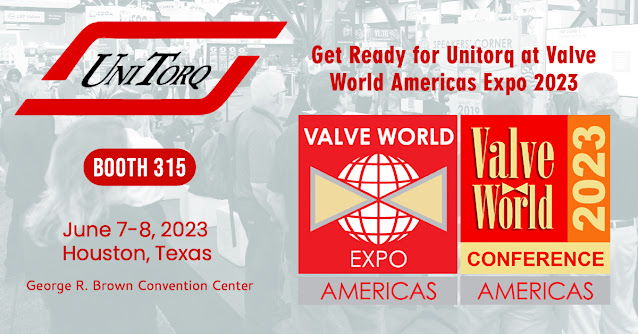
Get Ready for Unitorq at Valve World Americas Expo 2023

Get Ready for Unitorq at Valve World Americas Expo 2023

The future of valve actuation is coming to Houston! 

Join Unitorq, a leading electric and pneumatic actuator manufacturer, at the 2023 Valve World Americas Expo on June 7 and 8 for an unforgettable experience. Discover groundbreaking actuator technology and witness firsthand how Unitorq is advancing the industry.

The Valve World Americas Expo is a premier event in the valve and flow control industry, bringing together top professionals, manufacturers, suppliers, and end-users from North, Central, and South America. Held biennially, the Expo offers a unique platform for companies to showcase their latest products, services, and innovations while fostering networking and business development opportunities.

Come check out the world of Unitorq at Booth #315 and be a part of the valve actuation revolution. Seize the opportunity to elevate your business and stay ahead of the curve with Unitorq.

See you at the Valve World Americas Expo 2023!