
UniTorq: Revolutionizing Industrial Valve Actuation with Superior Products
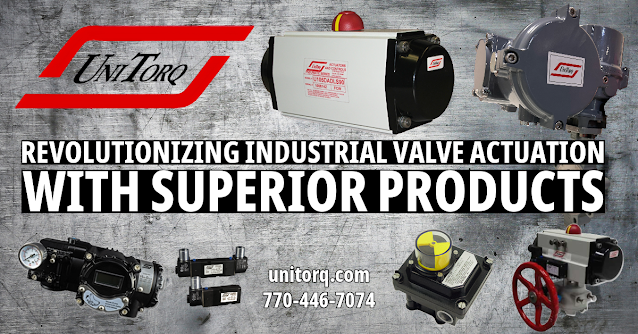
In the dynamic world of industrial automation, UniTorq stands out as a beacon of innovation and reliability. With a steadfast commitment to quality and performance, UniTorq has established itself as a leading manufacturer of industrial valve actuation products.
Pneumatic and Electric Actuators
UniTorq's pneumatic and electric actuators are the cornerstones of their product line. These actuators are designed for precision and durability, ensuring consistent performance even in the most demanding environments. Pneumatic actuators offer powerful and efficient operation, making them ideal for high-tonality and high-speed applications. On the other hand, the electric actuators provide unparalleled accuracy and control, suitable for processes that demand precise positioning and smooth motion.
Senitec Valve Position Indicators
A unique offering from UniTorq is the Senitec range of valve position indicators. These indicators provide clear and accurate visual feedback on valve positions, enhancing safety and operational efficiency. Senitec position indicators withstand harsh conditions, ensuring reliable performance in various industrial settings. Senitec indicators are an essential tool for maintaining process integrity and minimizing downtime.
Declutchable Gear Overrides
Understanding the need for manual operation indicators in specific scenarios, UniTorq offers declutchable gear overrides. These overrides enable manual control of valves during power outages or system maintenance. They are easy to engage and operate, maintaining process control even without power. This feature is precious in critical applications where continuous operation is paramount.
NAMUR Mount Solenoid Valves
The NAMUR mount solenoid valves from UniTorq provide seamless integration with actuators. These valves offer fast and reliable switching, essential for controlling fluid flow in automated systems. Their compatibility with NAMUR standards ensures ease of installation and maintenance, making them popular among industry professionals.
Valve Positioners
At the forefront of UniTorq's technological advancements are its valve positioners. These positioners provide sophisticated control of valve positioning, adapting to varying process conditions. They are equipped with diagnostic capabilities, enabling predictive maintenance and reducing the likelihood of unexpected downtime. The Smart valve positioners are a testament to UniTorq's commitment to innovation and operational excellence.
UniTorq's range of industrial valve actuation products, including pneumatic and electric actuators, Senitec valve position indicators, declutchable gear overrides, NAMUR mount solenoid valves, and Smart valve positioners, represent the pinnacle of engineering and design. These products are not just components but integral parts of a system that drives efficiency, safety, and reliability in industrial processes. UniTorq continues to lead the way in industrial automation, offering solutions that meet the evolving needs of various industries.
2150 Boggs Road, Suite 410
Duluth, GA 30096
https://unitorq.com
Phone: (770) 446-7074
Fax: (770) 447-1825
Distinguishing Between Quarter-Turn and Multi-Turn Electric Actuators in Valve Operation
Quarter-Turn Electric Actuators
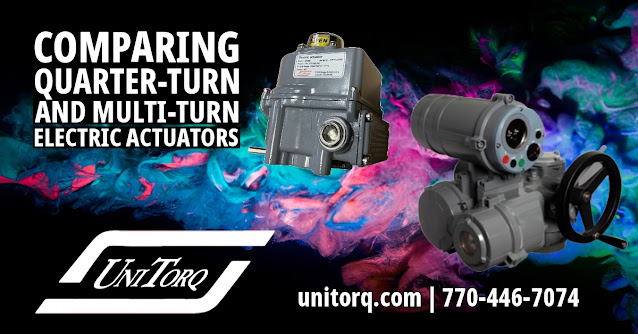
These actuators enable a valve to rotate 90 degrees, which is one-quarter of a full circle, hence the name. The mechanism inside a quarter-turn electric actuator typically employs a motor that drives gears to convert the motor's rotational movement into the 90-degree valve turn. These actuators are commonly found mounted on ball, plug, and butterfly valves.
A ball valve, for instance, has a ball with a hole in its center. When the actuator turns the ball to align the hole with the pipeline, it allows flow. Conversely, when it turns the ball so the hole sits perpendicular to the pipeline, it stops the flow. Similarly, a butterfly valve has a disc mounted on a rotating shaft. When the disc is parallel to the flow of liquid or gas, it lets the medium pass. Rotating it 90 degrees blocks the flow.
Multi-Turn Electric Actuators
As the name suggests, multi-turn electric actuators provide multiple rotations. These actuators often have mechanisms that allow the motor's continuous rotational motion to interface with valves requiring multiple turns to move from the open to closed positions or vice versa. Gate, globe, and some types of linear stem valves are ideal examples of where multi-turn actuators find their application.
For instance, consider a gate valve. It has a gate or wedge that moves up or down to obstruct or allow flow. This movement is not a simple rotation but requires multiple stem turns to ensure the gate fully ascends or descends. A multi-turn electric actuator provides this function. When the actuator motor rotates, it has a threaded stem that moves linearly, raising or lowering the valve's gate. A similar operation exists for globe valves, where the stem and the attached disc or plug move linearly up and down to regulate flow.
In summary, quarter-turn electric actuators serve valves that need a 90-degree rotation, such as ball, plug, and butterfly valves. In contrast, multi-turn electric actuators cater to those valves that demand multiple rotations, like gate and globe valves. The choice between the two depends heavily on the specific valve type and the desired control mechanism in the industrial setup.
2150 Boggs Road, Suite 410
Duluth, GA 30096
https://unitorq.com
Phone: (770) 446-7074
Fax: (770) 447-1825
UniTorq Unleashed: High-Performance Valve Automation
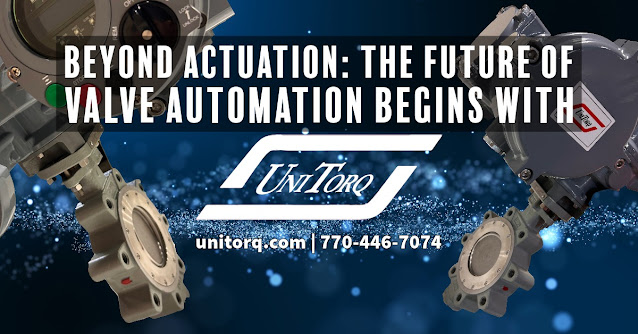
Industrial valve automation is pivotal in optimizing processes and ensuring safety across numerous sectors. From petrochemical plants to wastewater treatment facilities, the precise control of liquids and gases hinges on the flawless operation of automated valves. Proper valve automation ensures that substances flow at the correct rate, pressure, and direction, which is not just a matter of efficiency but often safety. Any oversight or malfunction can result in leaks, overflows, or even catastrophic system failures, posing risks to equipment, the environment, and, most importantly, human lives.
Furthermore, in an era where industries continually seek to enhance productivity and reduce downtime, efficient valve automation acts as the linchpin. When correctly integrated and maintained, automated valves minimize manual interventions, reduce human error, and enable rapid responses to changing conditions, streamlining operations and bolstering the reliability and longevity of industrial systems. In essence, proper industrial valve automation is not a mere convenience—it's imperative for safety and optimal operational performance.
UniTorq stands prominently in the valve actuator industry, consistently delivering electric and pneumatic solutions. Many in the field recognize UniTorq's commitment to quality, precision, and innovative approaches. The company values detail-oriented work and places a strong emphasis on customer satisfaction. They've expanded their services to encompass complete valve automation. From accurately sizing actuators to assembling valves and actuators, it undergoes meticulous attention and rigorous testing in every process stage. Those who collaborate with UniTorq find more than just a product; they discover a partnership rooted in expertise enriched by years of experience.
To learn more about UniTorq valve automation services, visit this link.
Size It Right: Understanding the Risks of Oversized Valve Actuators
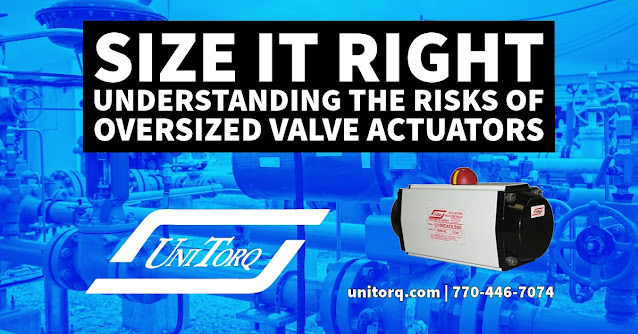
Undersizing valve actuators often lead to obvious problems, such as the inability to fully open or close a valve, which can significantly impact a system's operation and safety. However, the pitfalls of over-sizing valve actuators are less obvious but equally important to consider. Over-sized actuators, while seemingly a safer bet, bring many challenges, including higher costs, increased energy consumption, slower response times, and more. This article will delve into the often-overlooked disadvantages of oversizing valve actuators, shedding light on the importance of selecting the appropriate size for optimal system performance and efficiency.
Over-sizing valve actuators carries its own set of disadvantages.
- Higher Costs: Larger actuators are more expensive regarding the actual equipment, installation, and maintenance costs, unnecessarily increasing a project's capital and operational expenditure.
- Increased Energy Consumption: Larger actuators require more power to operate. This results in higher energy consumption, both economically and environmentally unfavorable.
- Slower Response Time: Oversized actuators may not respond as quickly to control signals as correctly sized ones, leading to slower operation and reduced system performance.
- Increased Wear and Tear: Operating an oversized actuator at less than its optimal capacity can lead to increased wear and tear because it may not operate in its most efficient range, leading to more frequent maintenance and repairs.
- Larger Footprint: Oversized actuators will occupy more space, which might be a critical issue in places where space is a premium.
- Higher Inertia: Larger actuators have higher inertia, which can make them less responsive to changes in control signals, making the control of the valve more complex and may lead to instability in the controlled process.
- Difficulty in Controlling Smaller Movements: Oversized actuators may have trouble controlling smaller valve movements as they are designed for larger forces and torques, leading to a lack of precision in the control of the valve.
- Compatibility Issues: There may be compatibility issues with the existing infrastructure, requiring additional modifications to the system to accommodate the larger actuator.
- Increased Weight: The increased weight of an oversized actuator may require additional support structures, increasing the complexity and cost of the installation.
- Suboptimal Performance: The actuator may not operate as efficiently as a properly sized one, leading to suboptimal performance of the valve and the overall system.
Selecting the correct actuator size is crucial for optimal system performance and efficiency. A proper sizing analysis is always recommended to choose the most appropriate actuator for a specific application.
UniTorq
770-446-7074
The Advantages of Using Anodized Aluminum in Industrial Rack and Pinion Actuators
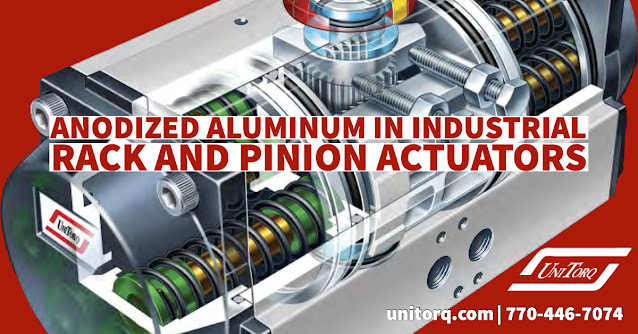
Rack and pinion actuators, widely used in industrial applications, deliver precise linear motion control. The preferred material for their construction is anodized aluminum due to its specific properties that enhance the performance and longevity of the actuators.
Anodized aluminum is lightweight, reducing the overall weight of the actuator system - a crucial factor in weight-sensitive industries like aerospace and automotive. Despite its lightweight, anodized aluminum retains considerable strength, making it suitable for applications demanding strength and durability.
The anodizing process converts the aluminum surface into a corrosion-resistant, anodic oxide finish, providing excellent protection from rust and other environmental corrosion. The thickness of this oxide layer depends on the type of anodizing—Type II or Type III—each providing different levels of corrosion resistance, surface hardness, and color vibrancy.
Type III, often called hard anodizing, forms a thicker oxide layer than Type II. This enhanced thickness results in superior wear resistance and durability, making it suitable for heavy-duty, high-wear applications. It also offers better resistance to high temperatures and produces a surface harder than tool steel. The downside of Type III is that it's less amenable to vibrant coloring due to its denser, less porous oxide layer and requires lower temperatures, higher current densities, and longer processing times.
In contrast, Type II anodizing, while producing a thinner oxide layer, is easier to color, making it more aesthetically adaptable. It's also a more cost-effective process, favoring applications where budget is a significant factor.
Anodized aluminum also offers high thermal conductivity, allowing effective heat dispersion, which is essential in applications where high heat could harm the actuator or shorten its lifespan. Furthermore, anodizing enhances the surface hardness of aluminum, which is beneficial for actuators operating in high wear-and-tear environments.
While anodized aluminum is a common choice, it's not universal, as the material selection depends on the application's specific requirements, environmental conditions, cost, and design constraints. Aesthetics also play, especially in consumer-facing applications, as anodized aluminum can be easily dyed to fit various color preferences.
The choice between Type II and Type III anodizing depends on the application requirements. Type III is the better choice for applications requiring maximum hardness and wear resistance, while Type II is preferable for cost-sensitive or aesthetically-focused applications.
https://unitorq.com
770-446-7074
Understanding Operating Torque and Seating Torque
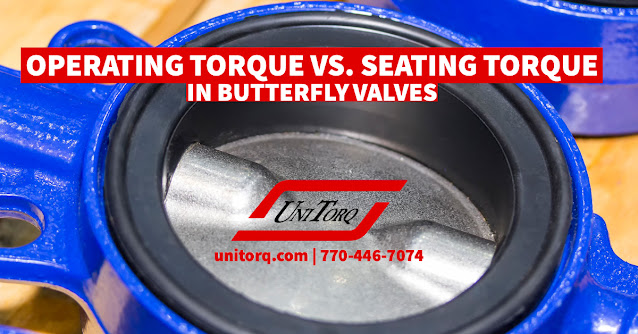
A butterfly valve is a type of quarter-turn valve that regulates fluid flow. It comprises a rotating disc in the middle of a pipe and an actuator to turn it parallel or perpendicular to the flow. The disc is attached to a stem operated by the actuator.
The two key aspects that play a crucial role in the operation and functionality of these valves are operating torque and seating torque:
- Operating Torque: This is the torque required to rotate the butterfly valve disc from the fully open position to the fully closed position (or vice versa). This torque is directly related to the fluid pressure and friction caused by the moving parts of the valve. It generally stays relatively constant throughout the open/close cycle, although it can fluctuate slightly depending on the valve's position and the fluid's flow rate and pressure.
- Seating Torque: Seating torque, also known as closing or breakout torque, is the additional torque needed to fully seat or unseat the valve (i.e., to move the disc from nearly fully closed to fully closed or from fully closed to slightly open). The seating torque is usually higher than the operating torque because it has to overcome additional forces like seal friction or pressure drop across the valve when it's nearly closed.
It's essential to distinguish between these two torque types when sizing a valve actuator for a few reasons:
- Avoiding Undersizing: An undersized actuator may not have sufficient torque to open or close the valve fully, mainly considering the valve's seating torque, which can cause a valve to be stuck in an undesirable position, potentially impacting process control and safety.
- Avoiding Oversizing: Conversely, if an actuator is too large, it could produce excessive torque that may damage the valve's seals or other components.
- Safety and Reliability: Actuators are typically sized with a safety factor to ensure reliable operation under various conditions (changes in pressure, temperature, etc.). Knowing the operating and seating torque allows for more precise sizing, contributing to the valve's overall safety, reliability, and lifespan.
- Efficiency and Cost: Correctly sizing an actuator contributes to energy efficiency, as an oversized actuator uses more energy than required. It also avoids unnecessary costs associated with purchasing and maintaining a larger actuator than needed.
- Adaptability: Having precise knowledge of operating and seating torque enables the actuator to adapt to possible changes in the process conditions (such as pressure, flow rate, or media composition), which may increase the torque requirements.
Understanding the operating and seating torque is essential for the optimal selection, operation, and maintenance of butterfly valves and their actuators.
UniTorq Actuators and Controls
2150 Boggs Road, Suite 410
Duluth, GA 30096
Phone: (770) 446-7074
Fax: (770) 447-1825
Subscribe to:
Posts (Atom)