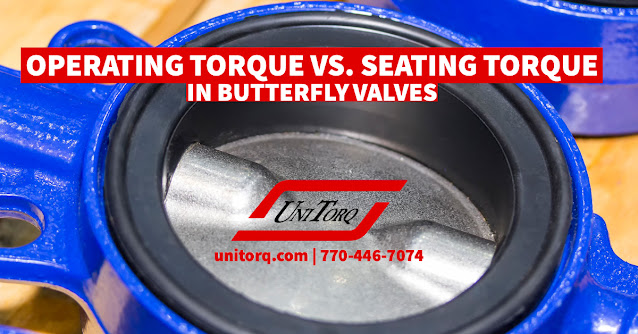
Understanding Operating Torque and Seating Torque

Understanding Operating Torque versus Seating Torque

A butterfly valve is a type of quarter-turn valve that regulates fluid flow. It comprises a rotating disc in the middle of a pipe and an actuator to turn it parallel or perpendicular to the flow. The disc is attached to a stem operated by the actuator.

The two key aspects that play a crucial role in the operation and functionality of these valves are operating torque and seating torque:
  • Operating Torque: This is the torque required to rotate the butterfly valve disc from the fully open position to the fully closed position (or vice versa). This torque is directly related to the fluid pressure and friction caused by the moving parts of the valve. It generally stays relatively constant throughout the open/close cycle, although it can fluctuate slightly depending on the valve's position and the fluid's flow rate and pressure.
  • Seating Torque: Seating torque, also known as closing or breakout torque, is the additional torque needed to fully seat or unseat the valve (i.e., to move the disc from nearly fully closed to fully closed or from fully closed to slightly open). The seating torque is usually higher than the operating torque because it has to overcome additional forces like seal friction or pressure drop across the valve when it's nearly closed.
It's essential to distinguish between these two torque types when sizing a valve actuator for a few reasons:
  • Avoiding Undersizing: An undersized actuator may not have sufficient torque to open or close the valve fully, mainly considering the valve's seating torque, which can cause a valve to be stuck in an undesirable position, potentially impacting process control and safety.
  • Avoiding Oversizing: Conversely, if an actuator is too large, it could produce excessive torque that may damage the valve's seals or other components.
  • Safety and Reliability: Actuators are typically sized with a safety factor to ensure reliable operation under various conditions (changes in pressure, temperature, etc.). Knowing the operating and seating torque allows for more precise sizing, contributing to the valve's overall safety, reliability, and lifespan.
  • Efficiency and Cost: Correctly sizing an actuator contributes to energy efficiency, as an oversized actuator uses more energy than required. It also avoids unnecessary costs associated with purchasing and maintaining a larger actuator than needed.
  • Adaptability: Having precise knowledge of operating and seating torque enables the actuator to adapt to possible changes in the process conditions (such as pressure, flow rate, or media composition), which may increase the torque requirements.
Understanding the operating and seating torque is essential for the optimal selection, operation, and maintenance of butterfly valves and their actuators.

UniTorq Actuators and Controls
2150 Boggs Road, Suite 410
Duluth, GA 30096
Phone: (770) 446-7074

Fax: (770) 447-1825

Get Ready for Unitorq at Valve World Americas Expo 2023

Get Ready for Unitorq at Valve World Americas Expo 2023

The future of valve actuation is coming to Houston! 

Join Unitorq, a leading electric and pneumatic actuator manufacturer, at the 2023 Valve World Americas Expo on June 7 and 8 for an unforgettable experience. Discover groundbreaking actuator technology and witness firsthand how Unitorq is advancing the industry.

The Valve World Americas Expo is a premier event in the valve and flow control industry, bringing together top professionals, manufacturers, suppliers, and end-users from North, Central, and South America. Held biennially, the Expo offers a unique platform for companies to showcase their latest products, services, and innovations while fostering networking and business development opportunities.

Come check out the world of Unitorq at Booth #315 and be a part of the valve actuation revolution. Seize the opportunity to elevate your business and stay ahead of the curve with Unitorq.

See you at the Valve World Americas Expo 2023!

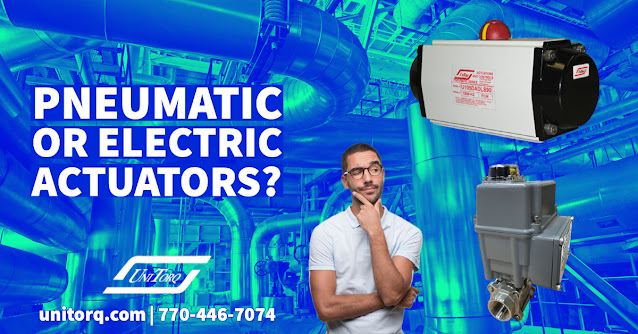
Electric vs. Pneumatic Valve Actuators: Which One to Choose for Industrial Process Control Applications

Electric vs. Pneumatic Valve Actuators: Which One to Choose for Industrial Process Control Applications

Valve actuators are essential components in industrial process control systems, responsible for precisely controlling and regulating fluid flow. There are various valve actuators, but the two most commonly used in the industry are electric and pneumatic. The choice between electric and pneumatic valve actuators depends on the specific requirements of the application, including factors such as cost, accuracy, speed, and environmental conditions. In this article, we will discuss the advantages of electric and pneumatic valve actuators and outline the situations in which each type is better applied.


Electric Valve Actuators


Electric valve actuators convert electrical energy into mechanical energy to control the opening and closing of valves. They are applied in industrial applications due to their accuracy, reliability, and ease of integration with digital control systems.


Best Applied In:


  1. Precision control: Electric actuators offer high accuracy, making them ideal for applications requiring precise fluid flow control, such as chemical processing or pharmaceutical manufacturing.
  2. Remote locations: Electric actuators are easily integrated with digital control systems, allowing for remote monitoring and control. This feature is especially useful in remote areas, where it might be challenging to maintain pneumatic systems.
  3. Energy efficiency: Electric actuators consume energy only when in operation, making them more energy-efficient than pneumatic actuators, which require a continuous air supply.
  4. Clean environments: Electric actuators do not require compressed air and do not emit exhaust, making them suitable for cleanroom applications or processes where contamination is a concern.


Pneumatic Valve Actuators


Pneumatic valve actuators use compressed air to control the opening and closing of valves. They are known for their robustness, high-speed operation, and ability to function in harsh environments.


Best Applied In:


  1. High-speed operations: Pneumatic actuators have a faster response time than electric actuators, making them ideal for high-speed processes, such as packaging and assembly lines.
  2. Hazardous environments: Pneumatic actuators can operate in environments with high levels of dust, moisture, or explosive gases, where electric actuators might pose a risk due to their potential to generate sparks.
  3. High-torque applications: Pneumatic actuators can generate a higher torque than electric actuators of comparable size, making them suitable for applications with large, heavy valves or high-pressure fluid flow.
  4. Fail-safe operation: Pneumatic actuators can be designed with a fail-safe feature that allows the valve to automatically return to a predetermined safe position in case of air supply failure, making them ideal for safety-critical applications.


Conclusion


When selecting between electric and pneumatic valve actuators, it is essential to consider the specific requirements of your industrial process control application. Electric actuators are best suited for precision control, energy efficiency, remote locations, and clean environments. In contrast, pneumatic actuators excel in high-speed operations, hazardous environments, high-torque applications, and fail-safe operations. By carefully evaluating these factors, you can choose the proper valve actuator to optimize your industrial process control system's performance, efficiency, and safety.


UniTorq Actuators and Controls
2150 Boggs Road, Suite 410
Duluth, GA 30096
Phone: (770) 446-7074

Fax: (770) 447-1825

Small and Medium-Sized Electric Valve Actuators in Chemical Processing Plants

Small and Medium-Sized Electric Valve Actuators in Chemical Processing Plants

The chemical processing industry constantly evolves, driven by technological advancements and increased efficiency, safety, and environmental sustainability demands. In recent years, small and medium-sized electric valve actuators have emerged as a game-changing technology, enabling significant improvements in process control and optimization in chemical plants.

What are Electric Valve Actuators?

Electric valve actuators are electromechanical devices that control remote or automated valves, enabling precise regulation of fluid flow and pressure within industrial processes. They convert electrical energy into mechanical motion, allowing for accurate and responsive valve control. Actuators come in various sizes and types, with small and medium-sized variants proving particularly popular and versatile in chemical processing applications.

Benefits of Small and Medium-Sized Electric Valve Actuators in Chemical Processing Plants


Enhanced Process Control and Efficiency

Small and medium-sized electric valve actuators allow for precise control of fluid flow rates and pressures, leading to more consistent and reliable processes. This, in turn, results in improved product quality and reduced waste, enhancing overall efficiency and profitability.


Energy Efficiency

Compared to their pneumatic and hydraulic counterparts, electric valve actuators consume less energy and require fewer auxiliary systems, such as air compressors or hydraulic power units. This reduction in energy consumption translates to significant cost savings and a smaller environmental footprint


Increased Safety

Chemical processing plants often involve hazardous materials and high-pressure systems. Electric valve actuators offer precise and reliable control, minimizing the risks associated with leaks, spills, and other process-related incidents. Additionally, their remote operation capabilities reduce the need for manual intervention, protecting plant personnel from potential exposure to hazardous environments.


Improved Diagnostics and Maintenance

Modern electric valve actuators come equipped with advanced diagnostics and monitoring capabilities, enabling real-time performance tracking and early identification of potential issues. This proactive approach to maintenance minimizes downtime, reduces repair costs, and ensures the long-term reliability of the actuators and associated equipment.


Scalability and Flexibility

Small and medium-sized electric valve actuators are compact and easily integrated into existing systems, making them ideal for retrofitting and upgrading applications. Their modular design allows for straightforward expansion and adaptation, ensuring that plants can readily adapt to evolving production requirements and regulatory standards.


UniTorq Actuators and Controls
2150 Boggs Road, Suite 410
Duluth, GA 30096
Phone: (770) 446-7074

Fax: (770) 447-1825

The Difference Between Direct Acting and Spring Return Pneumatic Actuators

The Difference Between Direct Acting and Spring Return Pneumatic Actuators

Pneumatic actuators are devices that convert compressed air energy into mechanical motion to perform work, typically by linear or rotary movement. There are two main types of pneumatic actuators: direct acting and spring return.

Direct Acting Pneumatic Actuators:
These actuators use compressed air to drive the piston or diaphragm in one direction, producing linear or rotary motion. When air pressure is applied to one side of the piston or diaphragm, it moves in the corresponding direction, and when air pressure is removed, it remains in that position due to the air pressure acting against the opposite side. Direct acting actuators are typically used in applications where a steady state position is maintained after the actuator is actuated.

Spring Return Pneumatic Actuators:
These actuators are similar to direct acting actuators, but they have a spring mechanism that returns the actuator to its original position when the air supply is stopped or the pressure is reduced. The spring is typically compressed when air pressure is applied to one side of the piston or diaphragm, driving it in the corresponding direction. When the air pressure is removed, the spring expands, returning the actuator to its original position. Spring return actuators are commonly used in safety-critical applications, such as emergency shutdown systems or safety valves, where it is important to ensure that the actuator returns to a safe position in the absence of air pressure.

In summary, the main difference between direct acting and spring return pneumatic actuators is that the former uses compressed air to maintain its position, while the latter has a spring mechanism that returns it to its original position when the air supply is stopped or the pressure is reduced.

UniTorq Actuators and Controls
2150 Boggs Road, Suite 410
Duluth, GA 30096
Phone: (770) 446-7074
Fax: (770) 447-1825
Rack and Pinion Actuators

Rack and Pinion Actuators

Rack and pinion actuators are preferred for operating valves because they offer several advantages over other actuators. They are relatively simple and easy to maintain, with few moving parts. They are also compact, allowing for use in tight spaces. Additionally, rack and pinion actuators provide precise control over the valve, with high repeatability and accuracy. They are also capable of handling high torque loads, making them suitable for use with large valves. Overall, rack and pinion actuators are reliable, efficient, and cost-effective options for valve actuation.

UniTorq Actuators and Controls


UniTorq's basic principle is our complete dedication to customers' needs through the manufacture and distribution of superior products and dependable service and support, carried out in a continually improving process.

UniTorq supports customers through knowledgeable and dedicated sales and support staff that can assist in selecting the proper actuator based on valve data and endpoint operating criteria. In addition, we maintain an extensive supply of product inventory on hand to quickly fulfill orders and reduce wait times. Our sales and support staff are readily available and accessible so that customers get the answers they need quickly.

At UniTorq, quality means performance. Testing is performed both at the factory and warehouse before getting a UniTorq. With manufacturing processes that strive for continuous improvement and exhaustive performance testing, we are confident that our products meet or exceed all applicable standards before leaving our facility.

UniTorq Actuators and Controls
2150 Boggs Road, Suite 410
Duluth, GA 30096
Phone: (770) 446-7074
Fax: (770) 447-1825